TRUNK OR TREAT
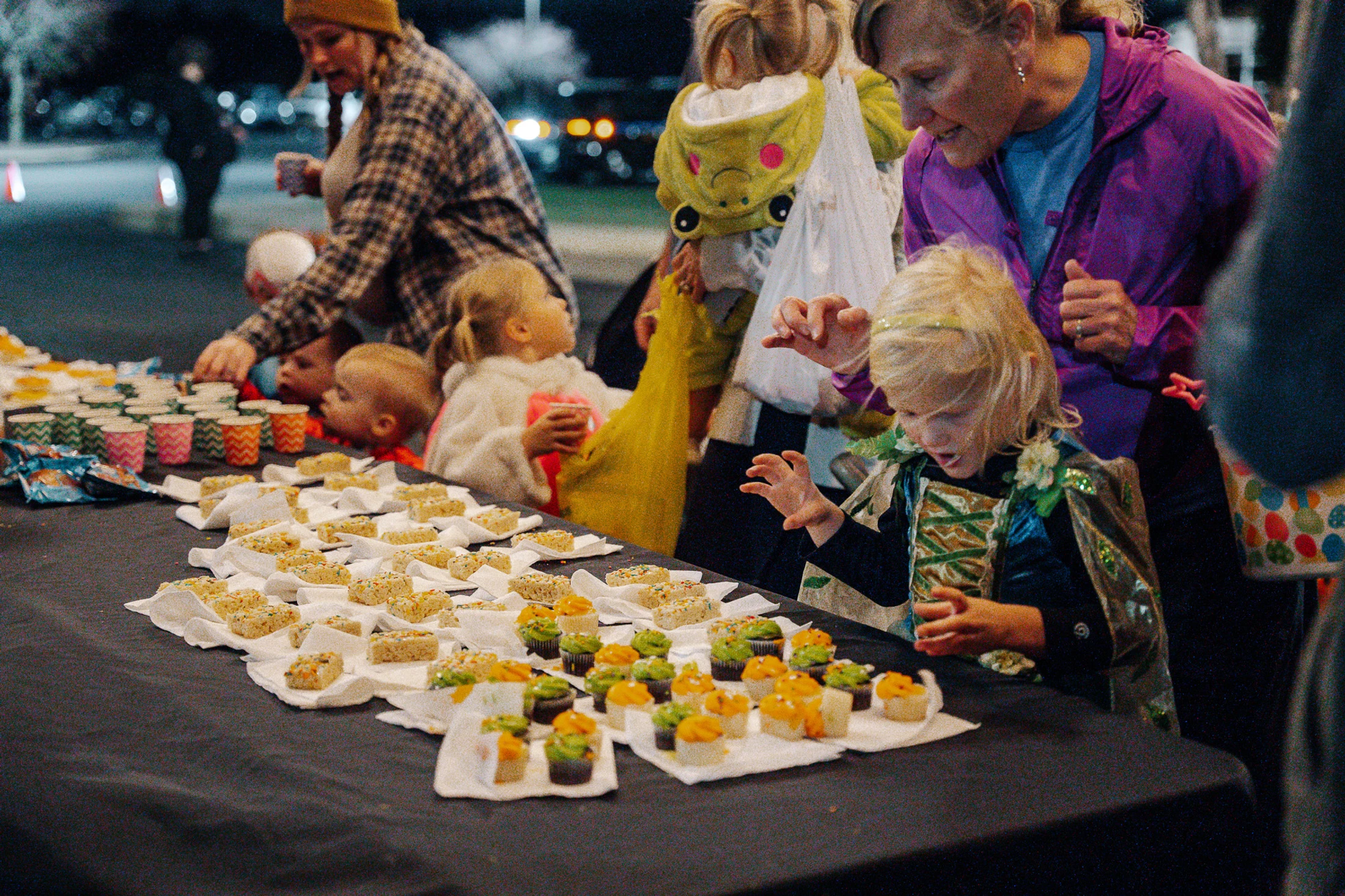
Join us for Trunk or Treat at Lakeland Community Church in Lake Geneva, WI! Bring the whole family for a FREE fun-filled evening of candy, costumes, decorated cars, games, and more.
October 28 • 7 PM
What to Expect at Trunk or Treat
Bring the whole family for a FREE night of fun! Enjoy free candy, warm cider, decorated trunks, costume fun, a photo booth, games, and more. It’s a family-friendly event with something for everyone!
🍬 Free Candy
🎃 Warm Cider
👨👩👧👦 Designed for Families
🚗 Decorated Trunks
🎃 Costume Fun
🎉 Photo Booth & Games

Trunk or Treat Costume Guide
Come dressed up and ready to have some fun! We love seeing creative, family-friendly costumes at Trunk or Treat. Please choose costumes that are fun, welcoming, and appropriate for all ages. We ask that costumes not be spooky or scary, and please skip face masks so everyone can easily see and interact with one another.
Costume ideas: Superheroes, animals, athletes, favorite characters, silly costumes, and anything creative!


Giveaway Time!
You could win one of three awesome prizes! Just come to Trunk or Treat and scan one of the QR codes around the event to enter.
🎟️ $200 Richardson’s Adventure Farm -
Enjoy a family adventure at Richardson’s Adventure Farm!
🎬 $100 Imagine Family Movie Night -
Make family movie night even better with a $100 gift card.
🍕 FREE PRIVATE LAKELAND PARK PARTY -
Host your own private party at Lakeland Park—with pizza included!
What Does the Bible Say About Halloween?
The Bible doesn't mention Halloween or give Christians a direct command to participate or not participate. That means we should be careful not to call something sinful when Scripture doesn't.
However, Scripture does give us principles that should shape how we approach every part of life. Christians are called to live in the world without being shaped by everything the world celebrates (John 17:14–18; Romans 12:2). We're also told, "Whatever you do, do it all for the glory of God" (1 Corinthians 10:31).
So the most important question isn't simply, "Is Halloween allowed?" A better question is, "How can I honor God in the way I approach it?"
Halloween's history can help us understand the holiday, but its history doesn't automatically determine the meaning of every modern activity. Dressing up, collecting candy, and spending time with neighbors are not the same as practicing or celebrating evil. What we're doing, why we're doing it, and what it communicates all matter.
We believe Christians can participate in Halloween without compromising their faith. But Christian freedom should always be practiced with wisdom.
Scripture tells us to consider whether our choices honor God, serve others, and provide a good witness (1 Corinthians 10:23–24, 31–33). Instead of asking only, “Can I do this?” we should also ask:
Can I participate in a way that honors God?
Is this wise for me and my family?
Does this choice celebrate what is good?
How will it affect my conscience and influence others?
Could this become an opportunity to show hospitality, generosity, and love?
For many Christians, Halloween provides a natural opportunity to connect with neighbors and be a positive presence in their community.
The Bible takes spiritual darkness seriously. It clearly warns against witchcraft, divination, consulting mediums, attempting to contact the dead, and seeking any spiritual power or knowledge apart from God (Deuteronomy 18:9–14; Acts 19:18–20).
Scripture also teaches that spiritual warfare is real. "For our struggle is not against flesh and blood, but against the rulers, against the authorities, against the powers of this dark world and against the spiritual forces of evil in the heavenly realms.“ (Ephesians 6:12). Christians shouldn’t treat actual occult practices as harmless entertainment or something to experiment with.
At the same time, we don’t need to live fearfully or superstitiously. Scripture doesn’t teach that a costume, decoration, or piece of candy automatically possesses spiritual power or gives evil access to our lives. Jesus is greater than every spiritual power, and believers belong to him (Colossians 2:13–15; 1 John 4:4).
Even when something is fictional or meant to be pretend, we should still ask whether it honors God. Philippians 4:8 calls us to direct our attention toward what is true, noble, right, pure, lovely, and commendable. Wisdom may lead Christians to draw different boundaries, but honoring God should remain the goal.
Yes. Dressing up, trick-or-treating, attending a party, or participating in a church Trunk or Treat can all be enjoyed without celebrating spiritual darkness.
The activity itself is only part of the decision. Our attitude, intentions, choices, and influence matter too. A Christian can participate while choosing costumes, decorations, conversations, and environments that reflect what is good and honor God.
At Lakeland, “family-friendly” is more than a costume guideline. It’s a value. It means considering how our choices affect other people, especially children and families. We want to create an environment that is joyful, welcoming, generous, and thoughtful. Ephesians 5:8–10 encourages believers to “live as children of light” and to discover what pleases the Lord.
Trunk or Treat gives us the opportunity to enjoy an evening together while practicing hospitality and showing our community that they are seen, welcomed, and loved.
Christians may reach different conclusions about Halloween while still being faithful to Jesus. Some may participate with a clear conscience. Others may choose not to because of personal conviction, family history, cultural background, or past involvement with the occult.
Romans 14:1–5 teaches believers not to treat one another with contempt or judgment over matters of conscience. “Each of them should be fully convinced in their own mind” (Romans 14:5).
Those who do choose to participate shouldn’t dismiss other Christians as fearful or legalistic because they choose not to participate. Those who abstain shouldn’t assume that everyone who participates is compromising their faith. Christian love values another person’s spiritual well-being more than winning an argument.
Parents are responsible for helping their children learn wisdom, not just giving them a list of what is and isn't allowed. Scripture calls parents to shape their children's faith through everyday conversations and decisions (Deuteronomy 6:6–7).
That means parents should consider more than whether something is technically allowed. They should think about their child's age, maturity, and sensitivity; whether an activity creates unhealthy fear or fascination; what a costume, story, or event celebrates; what their child is learning from the experience; whether their family can participate with a clear conscience; and whether their choices are thoughtful toward other children and families.
Not every boundary will be the same for every child. Parents can ask God for wisdom, talk openly with their children, and make decisions that help their family grow in faith rather than fear (James 1:5).
With patience, honesty, and grace.
A new believer doesn't need to be pressured into participating or given an extra-biblical list of rules. They need help learning how to follow Jesus, understand Scripture, live out of obedience to God, and make wise decisions.
We want them to understand that following Jesus changes every part of life, but Christianity isn't built on fear. God has rescued us from the dominion of darkness and brought us into the kingdom of Jesus (Colossians 1:13–14).
We should also listen carefully to their story. Someone with a history involving occult practices may need different boundaries from someone who associates Halloween only with costumes and neighborhood candy. Loving discipleship takes those differences seriously without judgment or pressure.
The goal isn't to discover how close we can get to a boundary without crossing it. The goal is to honor Jesus in every part of life.
When deciding whether or how to participate, ask: Does this honor God? (1 Corinthians 10:31) Is this wise and beneficial? (1 Corinthians 10:23) Can I do this from faith and with a clear conscience? (Romans 14:22–23) Does this reflect what is good and pleasing to God? (Philippians 4:8; Ephesians 5:8–10) Does my choice demonstrate love toward my family, other believers, and my neighbors? (Romans 14:13; Mark 12:31)
Christians are called to be present in the world without allowing the world to determine who we are. Halloween can be approached with wisdom, freedom, discernment, and a sincere desire to honor God.
Get Connected At Lakeland
New to Lakeland? We're glad you're here. Whether you're looking for a church, checking things out, or finding a place for your family, we'd love to help you get started.
__largepreview__.webp)